
Concrete Resurfacing Services: Restore, Protect, and Upgrade Existing Concrete
Concrete surfaces face relentless exposure to extreme weather, heavy vehicle traffic, and harsh chemical spills. Over the years, even expertly poured slabs begin to show signs of severe wear, surface degradation, and structural stress. Property owners often assume a crumbling or heavily stained driveway requires a complete, highly destructive tear-out. Demolishing and replacing a slab causes massive disruption, ruins surrounding landscaping, and creates a significant mess. Professional concrete resurfacing services offer a direct, highly effective alternative to total replacement. By applying commercial-grade overlays and protective resin coatings, contractors renew the structural integrity and visual appeal of an aging slab.
Property managers and homeowners in Rock Hill, SC deal with constant moisture fluctuations and temperature swings that accelerate surface damage. Applying a new layer of highly engineered material protects the original investment and creates a heavily armored barrier against future degradation. This guide details the exact mechanical processes, chemical applications, and long-term benefits of restoring existing slabs rather than destroying them.
What Are Concrete Resurfacing Services?
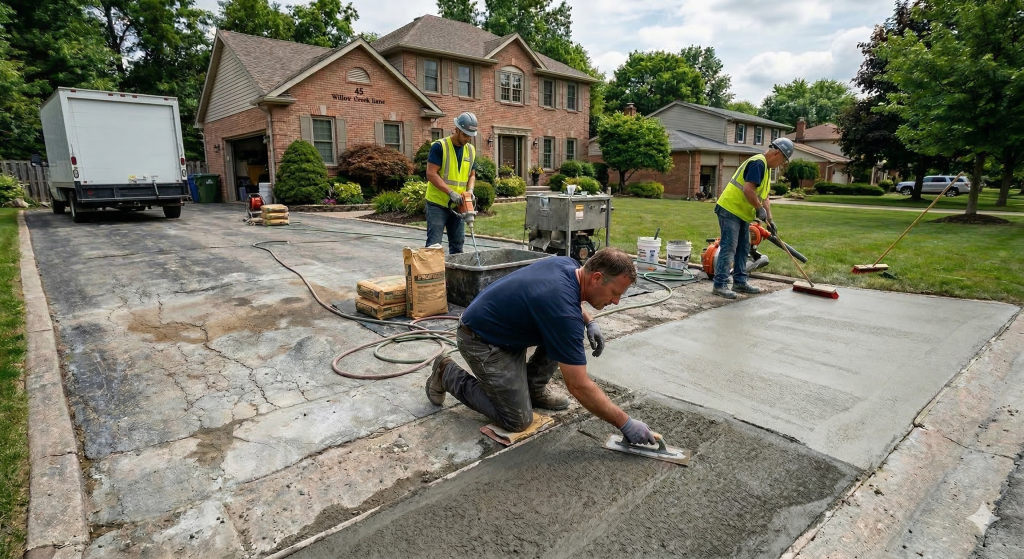
Concrete resurfacing services involve the application of a thin, polymer-modified cement or industrial resin overlay directly on top of an existing, structurally sound concrete slab. The process restores the damaged surface and provides a brand-new finish without requiring full demolition. The contractor grinds away the top layer of damaged material, repairs any visible structural cracks, and spreads a new, highly durable mixture over the profiled base.
This new layer cures to form a bond that often exceeds the strength of the original rock beneath it. The finished product looks and performs exactly like a freshly poured slab. The process offers numerous options for decorative textures, slip-resistant finishes, and custom colors, giving property owners the ability to completely change the aesthetic of the space during the restoration.
When Does Concrete Resurfacing Make Sense?
Not every damaged slab qualifies for an overlay. Evaluating the structural core of the rock dictates the correct course of action. Contractors perform a thorough inspection to determine the viability of the existing foundation.
Resurfacing provides the perfect solution for slabs displaying superficial damage. Minor scaling occurs when the top millimeter of cement paste flakes away, leaving the aggregate exposed and vulnerable to the elements. Resurfacing covers this scaling completely, locking the loose aggregate back into a solid matrix. Spiderweb cracking, deep motor oil stains, and widespread discoloration also present ideal scenarios for a restorative overlay. The underlying rock must remain solid, flat, and capable of supporting heavy weight.
A slab requires complete replacement if the damage penetrates deep into the subgrade. Slabs sinking heavily on one side indicate massive soil erosion beneath the surface. Chasms wider than a finger point to severe structural failure and shifting ground. Applying a thin overlay across a shifting, broken slab will simply cause the new material to crack along the exact same fault lines. A professional contractor identifies these structural deficits during the initial inspection to prevent applying new material over a failing foundation.
How Does the Concrete Resurfacing Process Work?
Applying a permanent overlay requires a highly methodical, step-by-step approach. Missing a single step compromises the chemical bond and leads to immediate peeling and product failure.
Deep Mechanical Profiling The crew arrives equipped with industrial walk-behind diamond grinders. These heavy machines shave off the top layer of the old slab. They remove all dirt, oil, old paint, and weak cement paste. This intense grinding leaves a rough, porous surface necessary for the new material to grip.
Crack Repair and Joint Filling The crew cleans out all existing cracks with compressed air and specialized vacuums. They inject a fast-curing polyurea or two-part epoxy filler directly into the voids. This binds the broken pieces together and creates a flush, level surface. Ignoring cracks allows them to mirror through the new overlay.
Priming the Base The contractor rolls an industrial bonding primer across the porous, ground concrete. This liquid wicks into the microscopic pores and acts as the structural glue connecting the old slab to the new restorative material.
Mixing and Applying the Overlay The crew mixes the polymer-modified cement or resin using precise measurements. They pour the liquid mass onto the primed base. Using gauge rakes, squeegees, and steel trowels, the installers spread the material evenly across the entire surface, achieving a perfectly level plane.
Finishing and Sealing Once the material reaches the correct curing consistency, the crew applies the desired texture. They might drag a stiff broom across the surface for exterior traction or use specialized trowels for a smooth interior finish. A clear, penetrating sealer is then rolled over the cured surface to block water, block stains, and protect the color.
Which Resurfacing Methods Provide the Highest Durability?
Different environments demand different restorative materials. Professional contractors select the exact chemical compound based on the physical demands of the space, the expected traffic, and the desired visual outcome.
Polymer-Modified Cement Overlays Standard cement lacks flexibility and bonding power. Manufacturers blend acrylics and advanced polymers directly into the cement powder. When mixed with water, these polymers create a highly flexible, incredibly sticky material. It bonds tenaciously to the old slab and flexes slightly under heavy loads, preventing it from snapping under the weight of a vehicle. This method works perfectly for exterior driveways, pool decks, walkways, and patios.
Epoxy and Polyaspartic Coatings Interior spaces like residential garages, commercial warehouses, and retail showrooms require industrial resins for the ultimate restoration. Installers apply thick layers of 100% solids epoxy to fill minor imperfections, bridge small cracks, and level the floor. A polyaspartic topcoat delivers massive abrasion resistance and intense chemical defense. These resins cure to a hardness that withstands dropped steel tools, heavy vehicle traffic, and constant hot-tire friction.
Micro-Toppings Micro-toppings provide a much thinner layer of restoration, usually applied by trowel or squeegee. They excel in interior environments where altering the floor height would interfere with doors and baseboards. These toppings deliver a smooth, mottled appearance often seen in modern architectural designs, providing a fresh canvas for acid stains or concrete dyes.
Why Is Mechanical Surface Preparation Mandatory?
The success of concrete resurfacing services relies entirely on absolute adhesion. If the new layer fails to bond with the old slab, the material will chip, flake, and break away within weeks of application.
Many amateur kits instruct the user to clean the floor with a chemical acid wash. Acid etching creates an inconsistent, shallow profile and forces gallons of water deep into the porous slab. When the overlay is applied, the trapped moisture tries to escape through evaporation, causing the new material to blister and separate from the rock.
Commercial contractors rely strictly on heavy mechanical preparation. Diamond grinding physically tears away the top layer of the rock. It exposes the fresh, clean pores hidden beneath the damaged surface. The heavy machines feature attached industrial vacuums, capturing the concrete dust before it contaminates the workspace or surrounding air. The resulting surface profile acts like microscopic sandpaper. When the liquid primer hits this rough profile, it sinks deep into the open pores and hardens, creating a permanent, mechanical anchor that locks the new surface to the old foundation.
How Do Environmental Factors in Rock Hill, SC Affect Concrete?
The climate in Rock Hill, SC introduces severe, continuous stress to exterior flatwork. Slabs absorb rainwater and ground humidity like a giant sponge. During the winter months, temperatures occasionally drop below freezing. The water trapped inside the porous concrete freezes and expands. This internal expansion breaks the rigid cement bonds, causing the surface to spall and chip away in large flakes.
The intense summer sun provides another severe challenge. Constant ultraviolet radiation breaks down cheap sealers and store-bought paints, leaving the raw rock exposed directly to the elements. High humidity also pushes moisture up through the slab from the soil below, a process called moisture vapor transmission, which destroys weak surface coatings.
Professional concrete resurfacing services address these exact environmental threats head-on. The polymer-modified overlays and commercial protective sealers create a completely waterproof membrane. Water beads up on the surface and rolls off, rather than soaking into the slab. Polyaspartic topcoats feature built-in UV resistance, stopping the Carolina sun from yellowing or degrading the protective layer over time.
What Are the Long-Term Durability Expectations?
A professionally installed overlay acts as a permanent upgrade to the property. When bonded correctly to a stable base, a resurfaced slab will easily outlast the damaged concrete it replaced. The polymer additives within the mix provide superior compressive strength, resisting the heavy weight of large trucks, riding mowers, and shop equipment without cracking.
Maintaining the restored surface requires minimal effort. The impermeable sealers stop motor oil, rust, and dirt from penetrating the pores of the rock. Property owners clean the surface with a standard push broom and a mild, pH-neutral detergent. Rinsing the slab with a garden hose removes all loose debris and restores the clean appearance. Periodic resealing every few years maintains the water-resistant barrier and keeps the surface texture looking sharp and functioning correctly.
Why Does Professional Application Extend Concrete Life?
Handling commercial-grade restorative materials demands exact timing, specialized equipment, and deep chemical knowledge. Polymer-modified cements and industrial resins cure rapidly through intense exothermic chemical reactions. Once the components are mixed, the crew has a very narrow window to pour, spread, and finish the material before it hardens into an unworkable block in the bucket.
A professional team moves in unison. They manage the heavy 220-volt grinding equipment required for proper surface profiling. They handle the precise mixing ratios dictated by the material manufacturers. Adding too much water to a cement overlay dilutes the polymers and completely ruins the strength of the final product. Expert contractors measure everything with exact precision. Their experience guarantees a perfectly flat, highly durable surface free of unsightly trowel marks, bumps, and weak spots. Relying on experts stops the endless cycle of patching and delivers a permanent, beautiful solution.
Schedule Your Concrete Restoration Today
Ignoring a deteriorating slab leads to irreversible structural failure and the massive expense of a complete, destructive tear-out. Restoring the surface provides immediate protection against the elements, increases your property value, and delivers a flawless visual upgrade to your home or business.
Top Flight Garage Floors delivers expert concrete resurfacing services to properties throughout Rock Hill, SC and the surrounding regions. Our crews arrive fully equipped with heavy-duty diamond grinding machines and premium restorative materials to complete your project flawlessly the first time. Protect your investment and upgrade your property with a heavily armored, long-lasting surface. Contact Top Flight Garage Floors today to schedule a thorough site evaluation and begin your concrete restoration project.