
Metallic & Quartz Floor Coatings: High-Performance Decorative Flooring Systems
Concrete floors often suffer from neglect, leading to cracking, severe staining, and a dull, dusty appearance. Upgrading these surfaces requires industrial materials that provide heavy structural protection while delivering high-end visual appeal. Two of the most sought-after options in the architectural and commercial flooring industries are metallic & quartz floor coatings. These high-performance decorative flooring systems offer distinct physical properties, giving property owners in Rock Hill, SC, the ability to protect their concrete slabs while achieving precise aesthetic and functional goals.
Leaving a concrete slab bare exposes it to chemical intrusion and continuous wear. Installing a protective resin layer stops this degradation entirely. This guide explains the science behind these two distinct coating systems, the critical importance of mechanical surface preparation, the maintenance required to keep them looking pristine, and the reasons professional application remains an absolute necessity for long-term success.
Table of Contents
What Are Metallic & Quartz Floor Coatings?
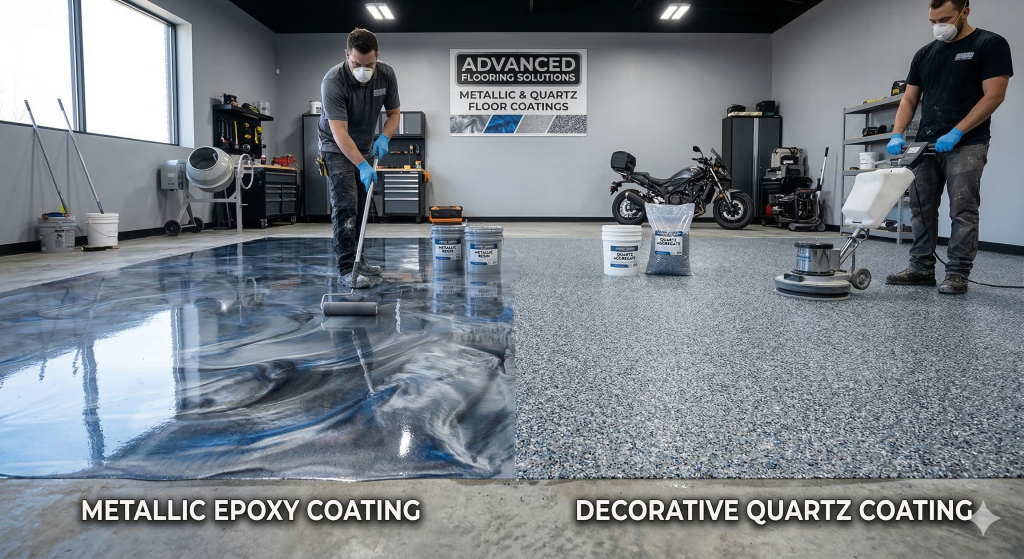
Metallic & quartz floor coatings are industrial-grade, multi-layer resinous flooring systems applied directly over mechanically prepared concrete. Metallic coatings blend clear epoxy or polyaspartic resins with highly reflective mica pigments to create a smooth, three-dimensional, marbled appearance. Quartz coatings consist of clear resins densely packed with colored quartz granules, creating a highly textured, slip-resistant surface designed for extreme physical abuse. Both systems completely seal the porous concrete beneath them, stopping chemical intrusion, moisture damage, and surface dusting while drastically altering the visual profile of the room.
The Science Behind Metallic Floor Coatings
Metallic systems rely heavily on fluid dynamics during the application process. The installer mixes a clear, industrial-grade resin with finely ground metallic pigments. Once poured onto the prepared concrete, these pigments twist, gather, and separate based on the movement of the liquid and the physical techniques applied by the contractor.
Installers use specialized rollers, squeegees, and chemical solvents to manipulate the curing resin. This manipulation creates unique visual effects resembling flowing water, molten lava, swirling storm clouds, or polished marble. Because the pigments are suspended in a thick, clear base coat, the floor develops an incredible depth of field. Light reflects off the suspended metallic particles at varying angles, creating a three-dimensional illusion on a perfectly flat surface.
This curing process makes every metallic floor a singular piece of architectural design. The exact flow pattern cannot be perfectly replicated twice. The final result is a high-gloss, glass-like finish that serves as a massive visual focal point for any room.
The Mechanics of Quartz Floor Coatings
While metallic systems focus on fluid aesthetics and glossy finishes, quartz systems prioritize extreme durability and aggressive physical grip. The installation follows a highly structured, multi-step broadcasting process. The contractor first applies a tinted or clear base coat of polyaspartic or epoxy resin. While this resin remains entirely wet, the installer broadcasts colored quartz granules across the entire surface until the floor reaches full rejection—meaning no wet spots remain visible.
After the first layer cures completely, the excess loose sand is swept and vacuumed away. Most commercial applications require a second layer of resin and a second full broadcast of quartz. This double broadcast system builds a thick, heavily armored floor.
A final clear topcoat encapsulates the quartz. The amount of topcoat applied dictates the final physical texture of the floor. A thinner topcoat leaves more of the quartz granules exposed, providing aggressive slip resistance for wet environments. A thicker topcoat smooths the surface for easier cleaning while retaining the immense compressive strength provided by the densely packed sand layers.
Where Do These High-Performance Systems Perform Well?
Matching the correct flooring system to the physical demands of the room prevents premature failure and guarantees a long lifespan.
Where Metallic Systems Excel The smooth, highly reflective finish of a metallic floor belongs in environments where visual impact takes priority over aggressive slip resistance.
- Residential Showroom Garages: Car enthusiasts who want their garage to mimic a luxury dealership favor the reflective qualities of metallic resins to highlight their vehicles.
- Basements and Living Spaces: The reflective nature brightens subterranean rooms that lack natural light, turning dull concrete into a luxury living area.
- Retail Stores and Restaurants: High-end boutiques and dining establishments use the marbled look to create an upscale atmosphere without the intense maintenance demands of real polished marble.
- Lobbies and Reception Areas: The immediate visual draw makes a strong impression on visiting clients walking through the front doors.
Where Quartz Systems Excel The gritty, armored nature of quartz belongs in environments facing heavy daily abuse, constant moisture, and high slip risks.
- Commercial Kitchens: Hot grease, boiling water, and dropped heavy pots require a floor that will not puncture and provide intense grip for the kitchen staff working in fast-paced conditions.
- Locker Rooms and Restrooms: Constant standing water from showers demands an aggressively textured surface to prevent severe slip and fall accidents.
- Industrial Workspaces: Heavy forklift traffic, dropped tools, and frequent chemical spills cannot penetrate the double-broadcast quartz layer.
- Outdoor Walkways and Patios: The UV-stable properties of polyaspartic resins combined with quartz granules create a safe, weatherproof exterior surface that withstands the elements.
Why Surface Preparation Determines Flooring Success
A high-performance coating is only as strong as its bond to the underlying concrete. Applying premium resins over dirty, sealed, or smooth concrete guarantees total failure. The new coating will peel away under the weight of a vehicle tire or the stress of seasonal temperature changes. Professional surface preparation remains the most critical phase of any flooring installation.
Contractors use heavy-duty mechanical equipment to profile the slab. Diamond grinding machines shave off the top layer of the concrete, completely removing old paint, deep oil stains, and hidden concrete sealers. This action opens the pores of the concrete slab.
Shot blasting provides another heavy-duty method for profiling. This machine fires tiny steel beads into the concrete at high speeds, pulverizing the top layer and immediately vacuuming up the dust and debris. Both diamond grinding and shot blasting create a rough, porous surface known as a concrete surface profile.
When the initial liquid base coat is applied to a properly profiled slab, the resin wicks deep into the open pores. As the resin cures, it locks mechanically into the concrete structure, creating an unbreakable bond.
Durability and Longevity of Decorative Flooring Systems
Both metallic and quartz systems deliver exceptional longevity when installed correctly by trained professionals. They replace the weak, dusty surface of standard concrete with an impermeable, heavy-duty barrier.
These systems resist a massive range of harsh chemicals. Motor oil, transmission fluid, battery acid, and harsh industrial cleaners wipe away without staining or etching the surface. The compressive strength of the cured resin easily supports heavy machinery, tool chests, and large vehicles without denting or chipping under the weight.
Polyaspartic topcoats add a vital layer of defense against ultraviolet light. Standard epoxies turn yellow and brittle when exposed to direct sunlight over time. Applying a premium polyaspartic clear coat over a metallic or quartz base prevents this degradation, keeping the colors vibrant and the structural integrity intact for years of continuous use.
Maintaining Metallic and Quartz Surfaces
Routine maintenance keeps these high-performance decorative flooring systems looking pristine and functioning correctly. The cleaning protocols differ drastically between the two systems based on their physical textures.
The smooth surface of a metallic floor requires gentle cleaning. Sweeping with a microfiber dust mop removes abrasive dirt particles that could scratch the high-gloss clear coat. Mopping with a pH-neutral cleaner mixed with warm water removes smudges, footprints, and minor spills. Stiff-bristle brushes, acidic cleaners, and heavy scrubbing machines will dull the mirror-like finish and should be strictly avoided.
Quartz systems demand a different cleaning approach due to their aggressive textured profile. Dirt and grime can settle deeply into the microscopic valleys between the encapsulated quartz granules. A standard string mop will simply snag on the texture, leaving fibers behind and failing to lift the dirt. Cleaning a quartz floor requires a stiff-bristled deck brush. Scrubbing the floor with a cleaning solution agitates the trapped dirt within the texture. Rinsing the floor with clean water and pushing the excess liquid out a drain or doorway with a foam squeegee leaves the surface spotless and restores the anti-slip grip.
Addressing Rock Hill, SC Climate Challenges
The local environment in Rock Hill, SC presents distinct challenges for concrete slabs. High humidity during the summer months and heavy spring rainstorms force moisture into the ground surrounding a building. This moisture travels upward through the porous concrete slab via capillary action, a process known as moisture vapor transmission.
When moisture vapor hits the underside of an impermeable floor coating, it creates immense hydrostatic pressure. This pressure will blister and blow the coating right off the concrete floor.
Professional flooring contractors test the concrete for moisture vapor levels before applying any decorative system. If moisture readings exceed safe limits, the installer applies a specialized moisture mitigation barrier. This deep-penetrating epoxy primer blocks the vapor entirely, protecting the metallic or quartz system layered on top. Managing the humid Carolina climate remains a mandatory step for long-lasting, successful floor installations.
Professional Installation vs. DIY Regret
Hardware stores sell boxes of epoxy paint that promise easy weekend application. Those products rely on thin, water-based paints that merely dry on top of the concrete rather than bonding deep within it. They lack the solid resin content, chemical resistance, and structural strength of true commercial coatings.
Applying metallic & quartz floor coatings requires exact timing, deep chemical knowledge, and specialized tools. Resins cure via an exothermic chemical reaction. Once the two chemical components are mixed in the bucket, the installer has a very brief window of time to pour, roll, manipulate, and broadcast before the material turns into a solid, unworkable block.
Amateurs attempting a metallic floor often end up with a cloudy, lumpy mess instead of a flowing, marbled masterpiece due to improper mixing and slow application times. Those attempting a quartz floor often broadcast the sand unevenly by hand, creating hazardous bumps and bare, slippery patches across the room. Professional installers arrive with trained crews, industrial diamond grinders, and the precise material expertise required to execute the complex application flawlessly before the rapid-curing resin sets.
Upgrading Your Property with High-Performance Flooring
Concrete floors no longer need to be the weakest link in a building’s design or function. Upgrading these surfaces provides immediate protection against structural wear while completely changing the visual appeal of the entire room. Whether the project requires the luxurious, reflective finish of a marbled resin or the heavy-duty, slip-resistant grip of a double-broadcast aggregate, these systems outlast and outperform traditional flooring options in every category.
Selecting the correct system requires a thorough evaluation of the daily traffic, chemical exposure, and moisture levels present in the specific room. By relying on commercial-grade resins and heavy mechanical concrete preparation, property owners secure a surface that requires minimal maintenance while delivering massive durability.
Top Flight Garage Floors provides the technical precision needed to install flawless metallic & quartz floor coatings in Rock Hill, SC. Our trained crews handle the rigorous surface preparation, precise moisture testing, and complex resin applications required to deliver floors that stand up to heavy industrial use and demanding design standards alike.
Stop living with stained, failing concrete surfaces. Contact Top Flight Garage Floors today to schedule an on-site consultation and upgrade your property with a true high-performance flooring system.